In three sentences
Ethiopian coffee is the most fragrant in the world: jasmine, bergamot and citrus in washed lots, red berries and chocolate in naturals. Washed Sidamo is the safe choice for filter and French press, natural Yirgacheffe suits lovers of fruity cups, Guji is for the curious. In Dakar, expect 7,000 to 8,500 FCFA per 250 g for a traceable lot roasted within the week.
Why Ethiopia stands apart
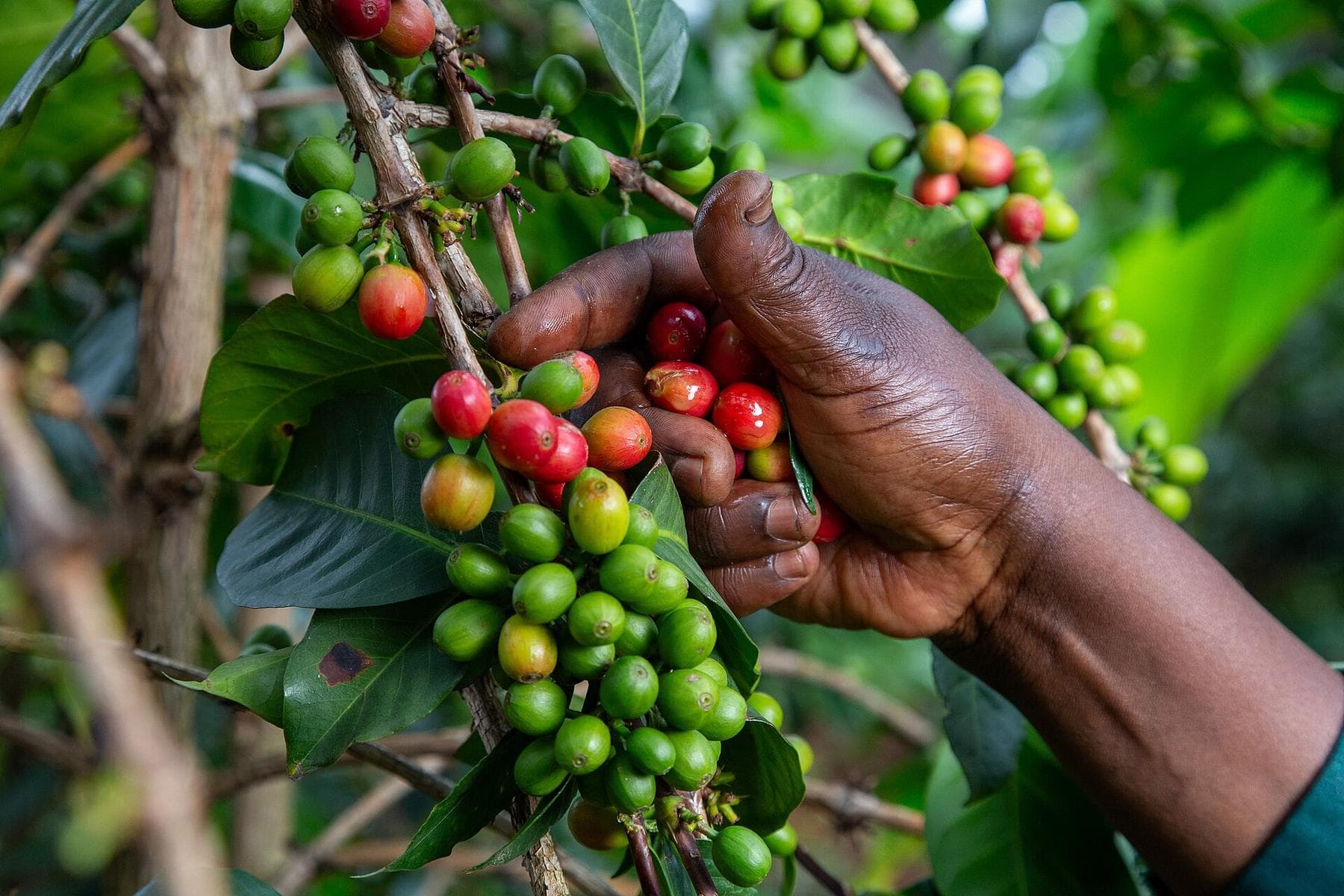
Coffee was born in the forests of Kaffa, in the south-west of the country. Ethiopia still grows thousands of local "heirloom" varieties found nowhere else, on farms under one hectare, between 1,800 and 2,200 m. That genetic diversity and altitude produce dense beans, rich in aromatic acids, which do not take well to dark roasting: they are roasted light to keep the perfume.
The three regions, compared
| Region | Altitude | Usual process | Cup | Best for |
|---|---|---|---|---|
| Sidamo (Bensa, Aleta Wondo) | 1,900 to 2,200 m | Washed | Bergamot, jasmine, candied lemon, light body | Filter, Chemex, French press |
| Yirgacheffe (Gedeo) | 1,800 to 2,100 m | Washed or natural | Washed: flowers and black tea. Natural: blueberry, strawberry, milk chocolate | Filter for washed, lungo for natural |
| Guji (Uraga, Shakiso) | 1,900 to 2,300 m | Natural, sometimes anaerobic | Tropical fruit, syrup, wine | Slow coffee, tasting |
The process matters as much as the region. A washed lot has been pulped and fermented in water: the cup is clean, floral, bright. A natural lot dried in the cherry on raised beds for two to three weeks: the bean absorbs the fruit sugars and the cup turns round, fruity, almost winey.
What it costs, and why
Prices seen in Dakar in September 2026 for a traceable lot roasted locally:
| Format | Washed Sidamo | Natural Yirgacheffe | Price per kg |
|---|---|---|---|
| 250 g | 7,500 FCFA | 8,000 FCFA | 30,000 to 32,000 |
| 1 kg | 26,000 FCFA | 28,000 FCFA | 26,000 to 28,000 |
| 5 kg (trade) | 118,000 FCFA | 126,000 FCFA | 23,600 to 25,200 |
The gap with supermarket coffee (4,000 to 6,000 FCFA per 250 g) comes from hand sorting of cherries, export grade, small-lot shipping and fresh roasting. An Ethiopian roasted eight months ago has lost what justified its price.
Case study: which Ethiopian for which brewer
- Drip or V60 in the morning: washed Sidamo, medium grind, 15 g for 250 ml at 94 °C. Expect a clear cup, drunk without sugar.
- French press for two: natural Yirgacheffe, coarse grind, 30 g for 500 ml, 4 minutes. Round and fruity, it pleases those who find filter too light.
- Espresso machine: go for a natural Yirgacheffe as a lungo rather than a ristretto; washed Ethiopians turn sour on a badly dialled machine.
- Milk drinks: Ethiopia is not the best pick, its aromas vanish in milk. Choose a blend or a Brazil.